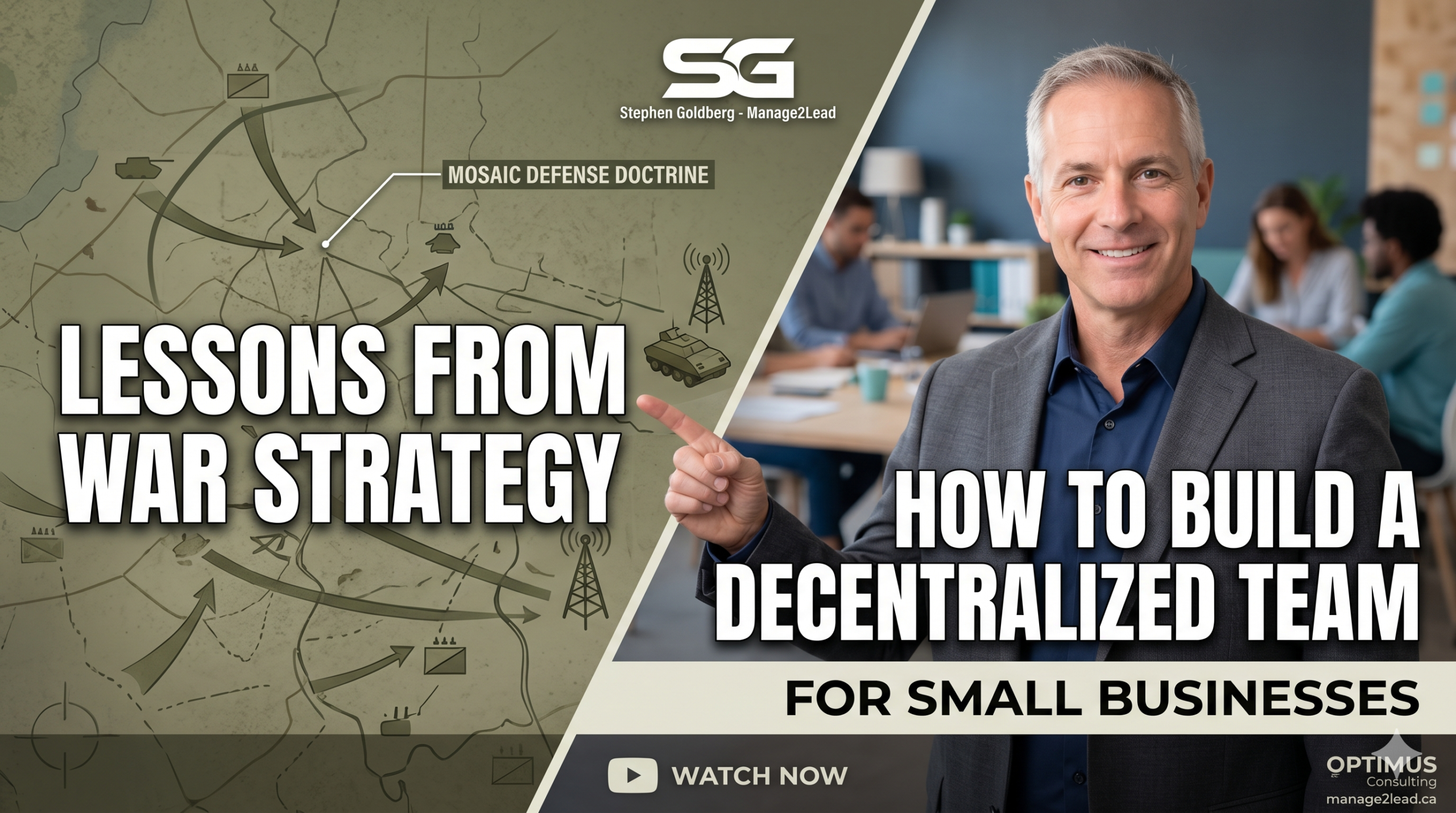
1. Introduction: The Evolution of Leadership
As a leadership consultant, the most common bottleneck I observe in small-to-medium enterprises is the “trapped” owner. These individuals have built successful companies but remain tethered to the day-to-day mechanics of the operation. They are forced into every decision, creating a strategic vacuum where innovation and high-level growth are sacrificed for the sake of basic maintenance. This state is not only unsustainable; it is a direct threat to the organization’s survival.
The transition from autocratic control to participative empowerment is no longer a luxury—it is a strategic mandate. By shifting authority away from a single point of failure and toward the workforce, a leader can finally reclaim the time necessary to focus on the vision and passion that birthed the company in the first place. This evolution transforms the workforce from mere executors into active contributors who ensure the business thrives in the leader’s absence.
Insight: Autonomy is the ultimate leverage. When you empower your workforce to handle the “how,” you free yourself to innovate on the “why.” This shift allows you to move from a state of constant maintenance to one of strategic evolution.
This transformation begins with a clear understanding of where your current management style sits on the leadership spectrum.
——————————————————————————–
2. The Leadership Spectrum: Autocratic vs. Participative
To build a high-functioning curriculum for your management team, you must first define the operational differences between traditional and modern leadership. The following table contrasts the autocratic model with the participative model across four critical dimensions.
| Feature | Autocratic Leadership | Participative/Democratic Leadership |
| Decision-Making Authority | Centered at the top; leader-led and rigid. | Decentralized; pushed to the lowest possible level. |
| Workforce Role | Task execution and adherence to instructions. | Empowered to make ad hoc decisions and self-manage. |
| Management Focus | Operational maintenance and day-to-day survival. | Strategic thinking, growth, and personal passion. |
| Organizational Goal | Maintenance and top-down control. | Innovation and reclaiming the leader’s time. |
The “Manage to Lead” Feature Set
In my “Manage2Lead” system, we prioritize three specific features of the participative style to ensure long-term organizational health:
- Building Autonomous Teams: This removes the leader as a single point of failure, allowing teams to function effectively without constant intervention.
- Defined Authority Levels: By explicitly mapping what decisions can be made at which level, we eliminate the guesswork and “decision paralysis” that plagues most SMEs.
- Continuous Improvement DNA: This ensures that innovation is not a task assigned by the boss, but a natural, cultural byproduct of an empowered staff.
If decentralized authority can serve as a survival mechanism in a high-stakes war zone, imagine the resilience it can provide for your department or company.
——————————————————————————–
3. Case Study: The Power of Decentralized Decision-Making
The efficacy of decentralization is often most visible in high-stakes environments. As highlighted in the CBC show “About That” hosted by Andrew Chang, the structure of the Islamic Revolutionary Guard Corps (IRGC) provides a stark lesson in organizational resilience. Despite top-down religious and political leadership, their fighting force operates on a decentralized model that is key to their survival.
Individual units are empowered to make ad hoc decisions based on localized conditions in their specific region or city. They do not wait for orders from the top; they respond immediately using their training and tools. This model succeeds because it rests on two essential pillars:
- Structural Decentralization: The physical and operational distribution of power allows for localized agility and rapid response.
- Culture and Belief Systems: This is the critical synthesis for any leader. Systems, training, and “weaponry” (the tools of your trade) are useless without a devotion to principles. The IRGC’s effectiveness is driven by a shared belief system and culture. For a business, this means that software and SOPs will fail if your team does not share a unified devotion to the company’s core mission and culture.
——————————————————————————–
4. Real-World Models of Autonomy and Self-Management
Radical autonomy is not a theoretical concept; it is a proven corporate strategy. The following organizations have utilized specific mechanisms to drive extraordinary outcomes.
Semco (Ricardo Semler)
- Mechanism: After facing a life-threatening health crisis at 24 years old due to extreme stress, Semler dismantled his father’s traditional hierarchy. He implemented a Democratic Style that pushed decisions to the lowest possible level.
- Outcome: Semler authored “Maverick“ and “The 7-Day Weekend” to chronicle this shift. The company became so successful that global corporations and universities now study Semco as the gold standard for decentralized management.
Patagonia (Yvon Chouinard]
- Mechanism: Chouinard practices “Management by Absence.” He intentionally removes himself from the office for months at a time, providing no top-down direction during these periods.
- Outcome: This mechanism serves as a rigorous test of staff resilience. The workforce is forced to take absolute ownership, ensuring the company’s operational health is independent of its founder.
The Morning Star Company
- Mechanism: This California-based tomato processor is a pioneer in self-management. There are no managers; instead, employees negotiate a “Colleague Letter of Understanding.”
- Outcome: These written agreements define responsibilities and authority levels between peers, creating a completely autonomous flow where work is managed by the people doing it, not by a supervisor.
——————————————————————————–
5. The “Manage2Lead” Framework: Tools for Empowerment
To move from an autocratic bottleneck to a participative leader, you must implement the “Manage to Lead” framework. The technical core of this system is the Win-Win Agreement.
This is a written agreement established between the boss and their direct report. It removes the ambiguity that leads to micromanagement by defining specific levels of authority. For every responsibility, it must be clear: Can the employee act autonomously, or is consultation required?
Steps to Architect an Autonomous Organization:
- Draft Win-Win Agreements: Formalize expectations between the boss and each direct report in writing.
- Establish Levels of Authority: Explicitly categorize decisions (e.g., Level 1: Act and report; Level 2: Consult then act; Level 3: Wait for approval).
- Systematize the DNA: Integrate “Continuous Improvement” and “Innovation” into the standard operating procedures so they occur without your prompting.
- Shift to Strategic Priority: Reallocate the time saved from day-to-day decisions into high-level strategy and projects that align with your core strengths.
——————————————————————————–
6. Summary: The Leader’s New Priority
The evolution from command to collaboration is a necessity for any leader who wishes to scale their impact. Building an autonomous, participative organization should not be a “to-do” item; it must be your top priority.
By combining structural decentralization with a robust culture and clear, written authority agreements, you reclaim your role as a visionary. True leadership is not the ability to make every decision; it is the skill to build a system where your workforce is empowered to lead themselves.
Key Takeaway: Your value as a leader is measured by the resilience and autonomy of your team in your absence, not by your involvement in their daily tasks.